
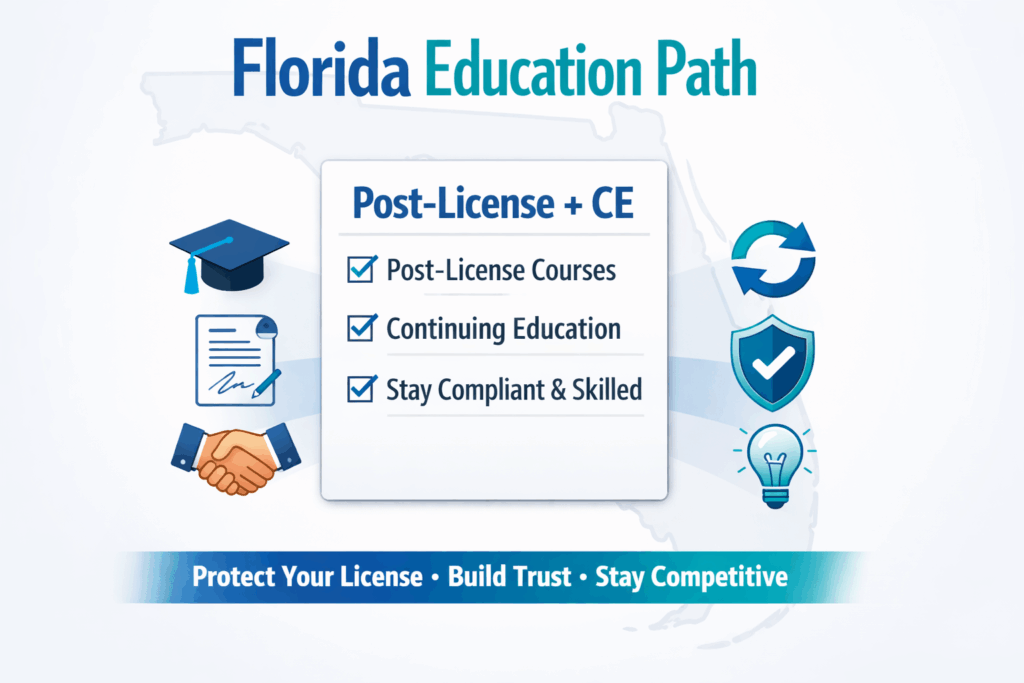
How required continuing education protects your license, your clients, and your career
TR;DR; Florida’s post-license and continuing education requirements aren’t just boxes to check—they help you stay compliant, reduce legal risk, build consumer trust, and stay competitive in a changing market.
Why Florida Requires Ongoing Education
Florida real estate is fast-moving, highly regulated, and consumer-focused. Because laws, rules, forms, and market practices evolve, Florida requires ongoing education to protect the public and maintain professional standards.
In addition, required education supports consistency across the industry—so consumers can expect a baseline level of competency from every active licensee.
What Post-License Education Really Does for New Agents
Pre-licensing helps you pass the state exam. Post-license training helps you practice real estate correctly in the real world—especially during your first renewal cycle, when new agents are most likely to make avoidable mistakes.
Post-license topics commonly strengthen your day-to-day skills in contracts, disclosures, escrow handling, brokerage relationships, and risk management.
Deadlines Matter: Avoid Losing Your License Status
Education deadlines are not flexible. If you miss a required post-license deadline, Florida can treat your license as void—meaning you may have to start over to become licensed again.
Therefore, it’s smart to build a renewal checklist early, track due dates, and complete education well ahead of time.
Continuing Education Keeps You Compliant
Continuing education reinforces legal and ethical responsibilities—so you don’t rely on outdated habits.
Moreover, it helps you stay current on advertising rules, disclosure expectations, escrow requirements, and other issues that can trigger complaints or discipline.
Continuing Education Reduces Real-World Risk
Many consumer complaints arise from preventable issues such as misrepresentation, improper disclosures, and escrow mistakes.
As a result, CE helps you spot problems earlier, document better, and ask the right questions before a small error becomes a big one.
Education Builds Consumer Trust—and Referral Business
Today’s buyers and sellers expect professionals who can explain contracts clearly, communicate confidently, and navigate issues calmly.
Consequently, agents who treat education as a business asset often earn stronger reviews, more referrals, and better long-term client relationships.
Education Helps You Stay Competitive in a Changing Market
The Florida market changes quickly—financing options, insurance issues, disclosure trends, and transaction workflows can shift year to year.
For that reason, continuing education helps you adapt faster and serve clients with more confidence, which can directly improve your conversion rate and closings.
Best Practices: Make Education Work for You
- Complete required education early—don’t wait until the last month.
- Take notes you can reuse: scripts, checklists, timelines, and disclosure reminders.
- Pair education with brokerage training so you can apply what you learn immediately.
- Keep a simple compliance folder (digital is fine): certificates, renewal dates, and course records.
Related Reading
- Florida Real Estate Commission (FREC) Explained: What New Agents Must Know (2025 Guide)
- Florida Real Estate Licensing Procedures
- The Most Common Mistakes New Florida Real Estate Agents Make — and How to Avoid Them (2025 Guide)
- Florida Real Estate First-Year Business Plan Guide
- How New Florida Real Estate Agents Choose the Right Broker
Final Thoughts
Florida’s post-license and continuing education requirements exist for a reason. When you take them seriously, you protect your license, your clients, and your reputation—while building a stronger career foundation.
In other words, required education isn’t just about renewal. It’s about longevity in the business.
Ready to take the next step?
https://oltraining.com/real-estate