
Image created with AI assistance.
What out-of-state agents and military families should know
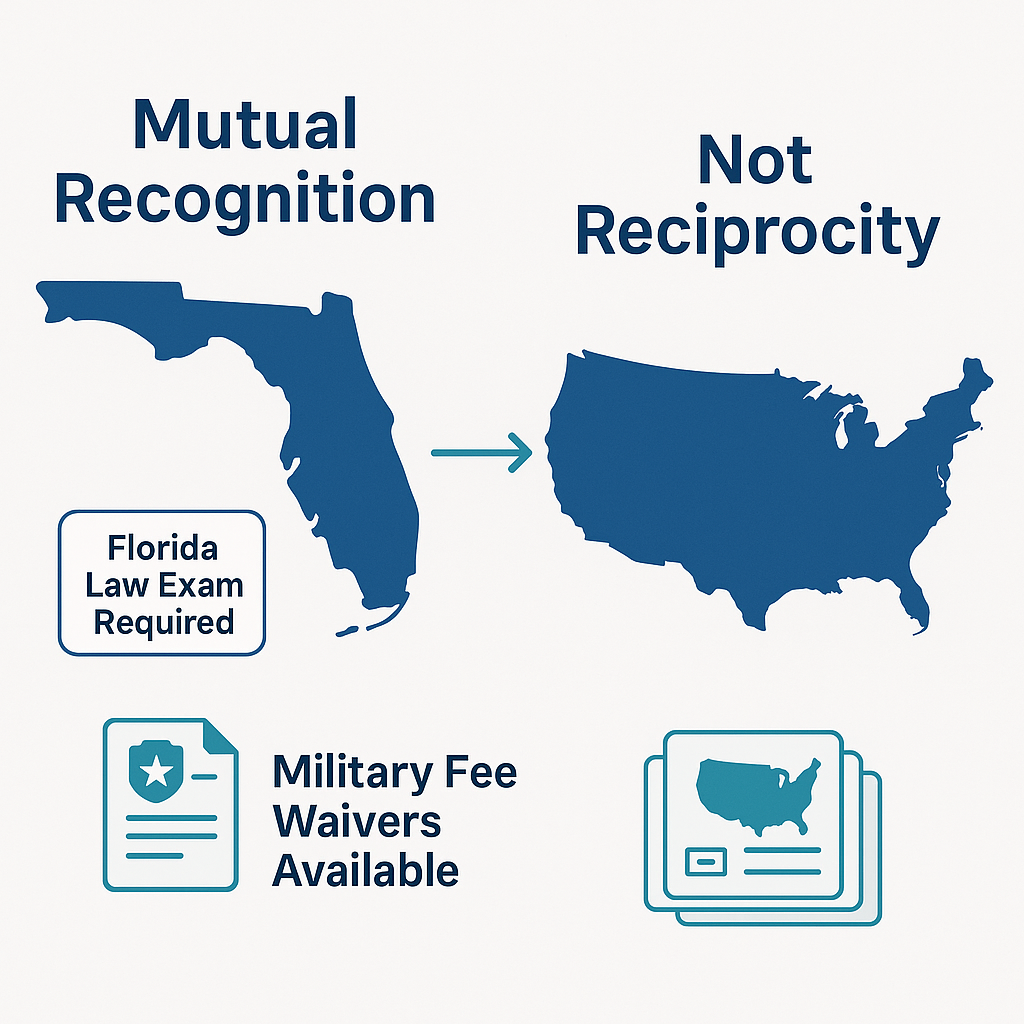
TL;DR: Florida mutual recognition vs. real estate license reciprocity. Instead, Florida uses mutual recognition with 10 states (including West Virginia). Qualified non-Florida residents may bypass Florida pre-licensing education but must pass the Florida law exam. Florida also offers DBPR licensing fee waivers for eligible active-duty members, veterans, and military spouses (exam fees are typically not covered).
What Is Florida Mutual Recognition in Real Estate?
Florida mutual recognition is used by certain licensed real estate professionals from other states. Mutual recognition can waive Florida’s pre-licensing education requirement when the applicant already holds an active license that was earned by meeting that state’s education and exam requirements.
However, mutual recognition is not automatic licensing. Applicants must still apply for Florida licensure and pass a Florida-specific real estate law exam.
Which States Qualify for Florida Mutual Recognition?
Florida’s current mutual recognition states are:
- Alabama
- Arkansas
- Connecticut
- Georgia
- Illinois
- Kentucky
- Mississippi
- Nebraska
- Rhode Island
- West Virginia
Important notes for applicants:
- You must not be a Florida resident at the time you apply.
- Your out-of-state license must be active and in good standing.
- You generally cannot claim mutual recognition if you obtained your license in the mutual state by reciprocity.
What Is Reciprocity—and Does Florida Offer It?
In everyday conversation, people use “reciprocity” to mean “Florida accepts my license from another state.” In real estate licensing, true reciprocity usually means the new state grants a license with little to no additional testing.
Florida does not offer true real estate license reciprocity. Instead, Florida requires out-of-state applicants to demonstrate Florida-law knowledge by passing a Florida-specific exam (including those applying under mutual recognition).
Who Can Get a Florida License Through Mutual Recognition?
To qualify through mutual recognition, you generally must:
- Hold an active license in one of Florida’s mutual recognition states
- Be in good standing (no unresolved discipline)
- Apply to DBPR for the equivalent Florida license type
- Pass the Florida-specific real estate law exam
Once licensed, you are subject to Florida renewal rules, including post-licensing and continuing education requirements.
Who Does NOT Qualify for Mutual Recognition?
You likely do not qualify for mutual recognition if:
- Your license is from a non-mutual-recognition state
- Your license is inactive, expired, or not in good standing
- You obtained your license in the mutual state by reciprocity (rather than that state’s education/exam path)
In these cases, you will typically need to complete Florida’s full pre-licensing education before you can take the Florida licensing exam.
Armed Forces Exemption and Military Licensing Rules (Fee Waivers)
Florida’s DBPR offers licensing fee waivers for eligible:
- Active-duty military members
- Veterans
- Military spouses (and certain surviving spouses)
These waivers can reduce or eliminate some DBPR licensing-related fees, but they generally do not include examination fees. You typically request a waiver by submitting the DBPR Military Member/Veteran/Spouse Fee Waiver and Military Service Verification form along with your license application.
Because military programs and eligibility details can change (and can depend on documentation and timing), applicants should review current DBPR guidance before applying.
Common Myths About Reciprocity and Mutual Recognition
Myth: “Florida has reciprocity with many states.”
Reality: Florida uses mutual recognition with a limited list of states.
Myth: “Mutual recognition means no exam.”
Reality: You must pass a Florida-specific real estate law exam.
Myth: “Military applicants get an automatic license.”
Reality: Military-related programs may offer fee waivers and accommodations, but Florida licensing requirements still apply.
Final Thoughts
Florida’s mutual recognition pathway can simplify licensing for certain non-Florida residents, but it is not the same as full reciprocity. Knowing the difference helps you plan your timeline, costs, and next steps.
If you’re an active-duty service member, veteran, or military spouse, be sure to explore DBPR’s fee-waiver options to reduce out-of-pocket expenses.
Ready to take your next step? Sign up at OLTraining.com and start your career off right!
Tags: Florida Real Estate License, Mutual Recognition, Reciprocity, West Virginia Real Estate, Out-of-State Agents, Military Spouse License, Veterans Benefits, Florida Real Estate Education, New Agents