
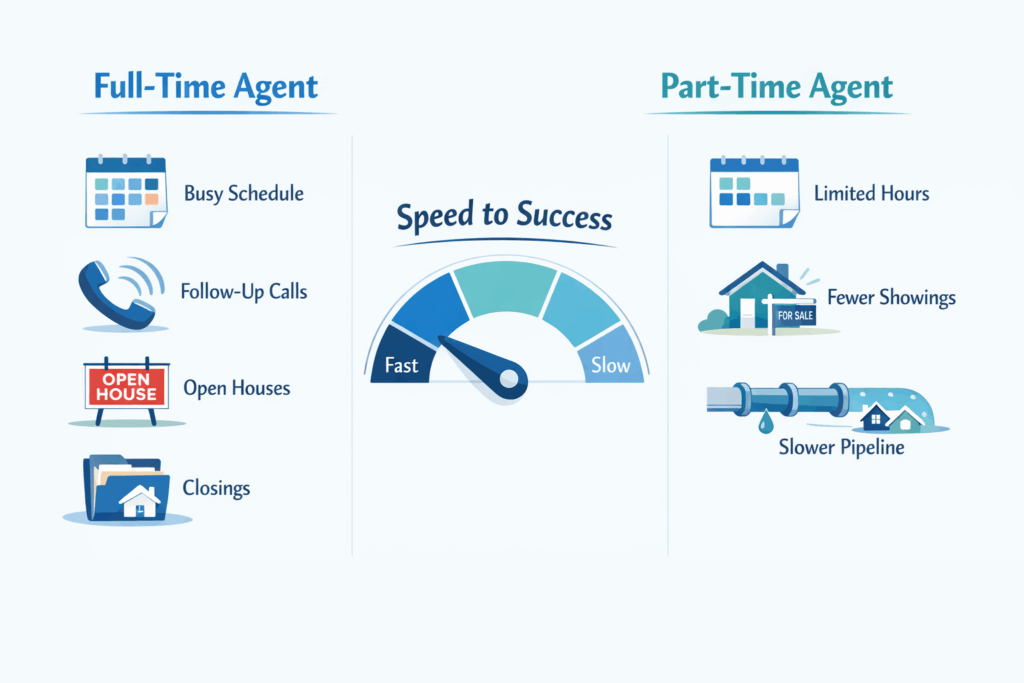
A practical comparison for new agents focused on faster success
TL;DR: Both full-time and part-time real estate careers can be successful, but agents who work full-time typically reach stability and income faster. Real estate rewards availability, consistency, and follow-up—factors that are easier to deliver when working full-time. Part-time agents can succeed, but usually on a longer timeline and with greater discipline.
Why This Decision Matters Early in Your Real Estate Career
One of the most common questions new real estate licensees ask is whether they can work part-time or need to commit full-time to succeed. While both paths are possible, the choice has a major impact on how quickly momentum builds.
Real estate is not just about knowledge—it is about availability, responsiveness, and repetition. The more time you can devote to these activities, the faster results tend to follow.
Working Full-Time in the Real Estate Business
Working full-time means real estate is your primary occupation and focus. This approach allows new agents to fully immerse themselves in learning, lead generation, and client service.
Advantages of working full-time include:
- Greater availability for showings, meetings, and negotiations
- Faster skill development through daily repetition
- More consistent lead generation and follow-up
- Stronger professional relationships with brokers and vendors
- Quicker momentum once transactions begin closing
Full-time agents are often perceived as more reliable simply because they can respond quickly and adapt to clients’ schedules.
Challenges of working full-time include:
- Requires financial planning or savings
- Income may be inconsistent early on
- Demands strong time management and self-discipline
Even with these challenges, full-time agents usually stabilize sooner because they can perform more income-producing activities each week.
Working Part-Time in the Real Estate Business
Many new agents begin part-time while maintaining another job or managing family responsibilities. This approach can work, but it comes with limitations.
Advantages of working part-time include:
- Lower financial risk during startup
- Continued income from another job
- Flexibility while transitioning careers
For some, part-time real estate serves as a stepping stone rather than a long-term strategy.
Limitations of working part-time include:
- Reduced availability for clients
- Fewer showings, open houses, and appointments
- Slower lead generation and follow-up
- Longer learning curve
Because real estate opportunities often arise with little notice, part-time agents may unintentionally miss business.
Which Path Leads to Faster Success?
If the goal is to become successful as fast as possible, working full-time provides a clear advantage.
Real estate success is largely driven by:
- The number of conversations you have
- Speed and consistency of follow-up
- Availability during decision-making moments
- Repetition of daily business activities
Full-time agents can simply do more of what leads to closings.
That said, a highly disciplined part-time agent with strong systems and realistic expectations can still succeed—just typically on a longer timeline.
A Strategic Hybrid Approach
Some agents begin part-time but do so with a clear plan to transition into full-time real estate.
A structured hybrid approach may include:
- Setting specific income or transaction goals
- Blocking daily prospecting time
- Treating real estate as a business, not a hobby
- Establishing a timeline for going full-time
Without structure, part-time real estate can easily become stalled progress.
What New Agents Commonly Underestimate
New agents—especially those working part-time—often underestimate:
- How much follow-up is required
- How many conversations lead to one closing
- The importance of quick response times
- The emotional and service demands of clients
Understanding these realities early helps agents set realistic expectations and avoid frustration.
Choosing the Right Path for You
Ask yourself:
- How quickly do I want results?
- Can I financially support a full-time transition?
- Am I disciplined enough to work part-time consistently?
- Do my clients need flexible availability?
There is no single right answer, but there is a realistic answer based on your goals and circumstances.
Final Thoughts
Both full-time and part-time real estate careers can lead to success, but they do not produce results at the same speed. Agents who commit full-time generally build momentum faster, learn more quickly, and stabilize income sooner.
If you choose to work part-time, do so intentionally, with structure and a clear plan. Real estate rewards commitment, consistency, and availability.
Ready to take your next step? Sign up at OLTraining.com and start your career off right!
Tags: Real Estate Career, Full-Time Real Estate, Part-Time Real Estate, New Agents, Real Estate Success, Florida Real Estate, Real Estate Business Planning, Career Transition