
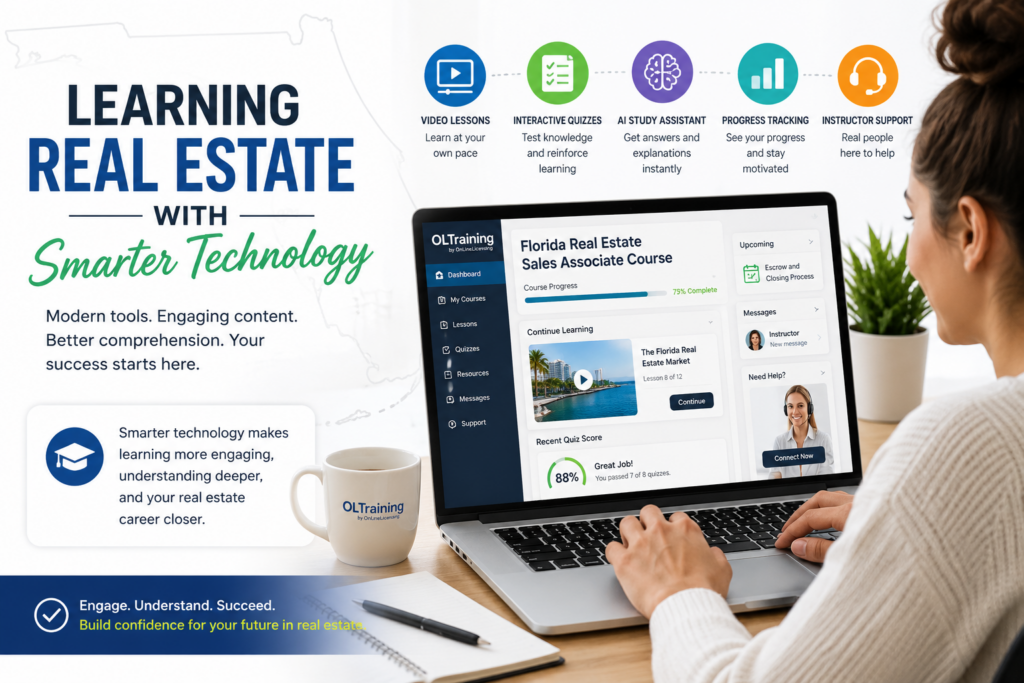
How modern learning tools make real estate education more enjoyable, practical, and easier to understand.
TL;DR
New technology is changing the way students learn real estate. Instead of reading long blocks of text and trying to memorize every rule, students can now use interactive lessons, videos, practice questions, progress tracking, scenario-based exercises, and AI-supported learning tools to understand the material more clearly. As a result, real estate courses can feel less overwhelming, more engaging, and more useful when preparing for the course exam, the state exam, and a future real estate career.
Why Technology Matters in Real Estate Education
Real estate courses cover a lot of important information. Students must understand laws, contracts, agency relationships, financing, disclosures, property ownership, math, closing procedures, and professional responsibilities. That can feel like a lot to absorb, especially for students who have not been in school for many years.
However, modern course technology can make the learning process easier. Instead of expecting students to simply read and remember, today’s better online courses are designed to help students see, hear, practice, review, and apply the information. This creates a more complete learning experience.
Interactive Lessons Keep Students Engaged
One of the biggest improvements in real estate education is the use of interactive lessons. These lessons may include clickable tabs, short knowledge checks, drag-and-drop activities, pop-up definitions, scenario questions, and built-in review exercises.
This matters because students learn better when they are actively involved. Rather than passively scrolling through a chapter, the student is asked to make decisions, answer questions, and connect course concepts to real-world situations. For example, a lesson on brokerage relationships may ask the student to identify whether a situation involves a single agent, transaction broker, or no brokerage relationship.
As a result, the student is not just memorizing terms. The student is practicing how those terms are used.
Video and Visual Learning Make Difficult Topics Easier
Some real estate topics are easier to understand when they are shown visually. Real estate math, closing cost calculations, amortization concepts, surveys, property descriptions, and contract timelines can be confusing when explained only in text.
Therefore, video explanations, diagrams, charts, and step-by-step visual examples can make a major difference. A student who struggles with a written explanation of prorations may understand the same concept quickly when the calculation is shown one step at a time.
In addition, short videos can help students stay focused. Instead of watching one long lecture, students can review smaller lessons that explain one concept at a time.
Practice Questions Build Confidence
Practice questions are one of the most useful technology tools in an online real estate course. They help students check their understanding before moving forward. More importantly, good practice questions provide explanations, not just right or wrong answers.
For example, if a student misses a question about escrow, the feedback should explain why the correct answer is right and why the other choices are incorrect. This turns a missed question into a learning opportunity.
Over time, repeated practice helps students recognize patterns, improve test-taking skills, and become more confident with real estate vocabulary and exam-style questions.
Scenario-Based Learning Connects the Course to Real Life
Real estate is a practical business. Students need to know more than definitions. They need to understand how those definitions apply when working with buyers, sellers, tenants, landlords, brokers, lenders, appraisers, and closing agents.
That is why scenario-based learning is so helpful. A course can present a realistic situation and ask the student what should happen next. For example, a scenario may involve a buyer asking about a property defect, a seller questioning a disclosure, or a sales associate receiving an escrow deposit.
Consequently, the student begins to think like a real estate professional, not just like a test taker.
AI-Supported Study Tools Can Personalize Review
Artificial intelligence is becoming more common in education and professional training. In a real estate course, AI-supported tools may help students review difficult concepts, summarize material, generate practice questions, explain vocabulary in simpler terms, or identify topics that need more study.
However, AI should support the learning process, not replace the course instructor or approved course content. Students still need accurate, state-specific instruction and reliable guidance. When used properly, AI can act like an additional study assistant that helps students review material in a more flexible way.
Progress Tracking Helps Students Stay Organized
Another helpful feature in modern real estate courses is progress tracking. Students can often see which lessons they have completed, which quizzes they passed, and which areas still need attention.
This helps students stay motivated. Instead of guessing where they are in the course, they can see their progress clearly. In addition, progress dashboards can help students create a study plan and avoid waiting until the last minute to complete important course requirements.
Mobile Learning Adds Flexibility
Many students are balancing work, family, and other responsibilities while completing a real estate course. For that reason, mobile-friendly course design is important.
When a course works well on a phone, tablet, laptop, or desktop computer, students have more opportunities to study. They may review flashcards during a lunch break, watch a short lesson in the evening, or complete a practice quiz while traveling.
As a result, learning becomes more flexible and easier to fit into a busy schedule.
Better Comprehension Comes from Repetition and Variety
Students do not all learn the same way. Some learn best by reading. Others learn best by listening, watching, practicing, or discussing the material. Modern course technology helps by presenting information in more than one format.
For example, a course may introduce a topic in written form, explain it again in a video, reinforce it with a diagram, test it with a quiz, and review it later in a practice exam. This repetition helps improve comprehension and retention.
In other words, the student gets more than one chance to understand the concept before it appears on an exam.
Technology Should Not Remove the Human Element
Technology is helpful, but students still need real support. A strong real estate course should make students feel guided, not isolated.
That means students should know how to ask questions, contact the school, and get help when a topic is confusing. Technology can make the course more enjoyable, but real instructor support helps students feel more confident and less alone.
The best learning experience combines both: modern course tools and access to real people who care about student success.
Final Thoughts
New technology is making real estate education more engaging, flexible, and effective. Interactive lessons, videos, practice questions, progress tracking, mobile access, AI-supported study tools, and scenario-based activities can help students understand the material instead of simply memorizing it.
Most importantly, these tools can make the learning process feel less intimidating. When students enjoy the course and understand the material more clearly, they are better prepared for exams and more confident about entering the real estate profession.
Ready to Take the Next Step?
Start your Florida real estate journey with real support
Learn Smarter. Understand Faster. Move Forward with Confidence.
Tags: Real Estate Courses, Real Estate Education, Online Learning, Real Estate Exam Prep, Florida Real Estate License, AI Learning Tools, Interactive Learning, Student Support, Course Technology