
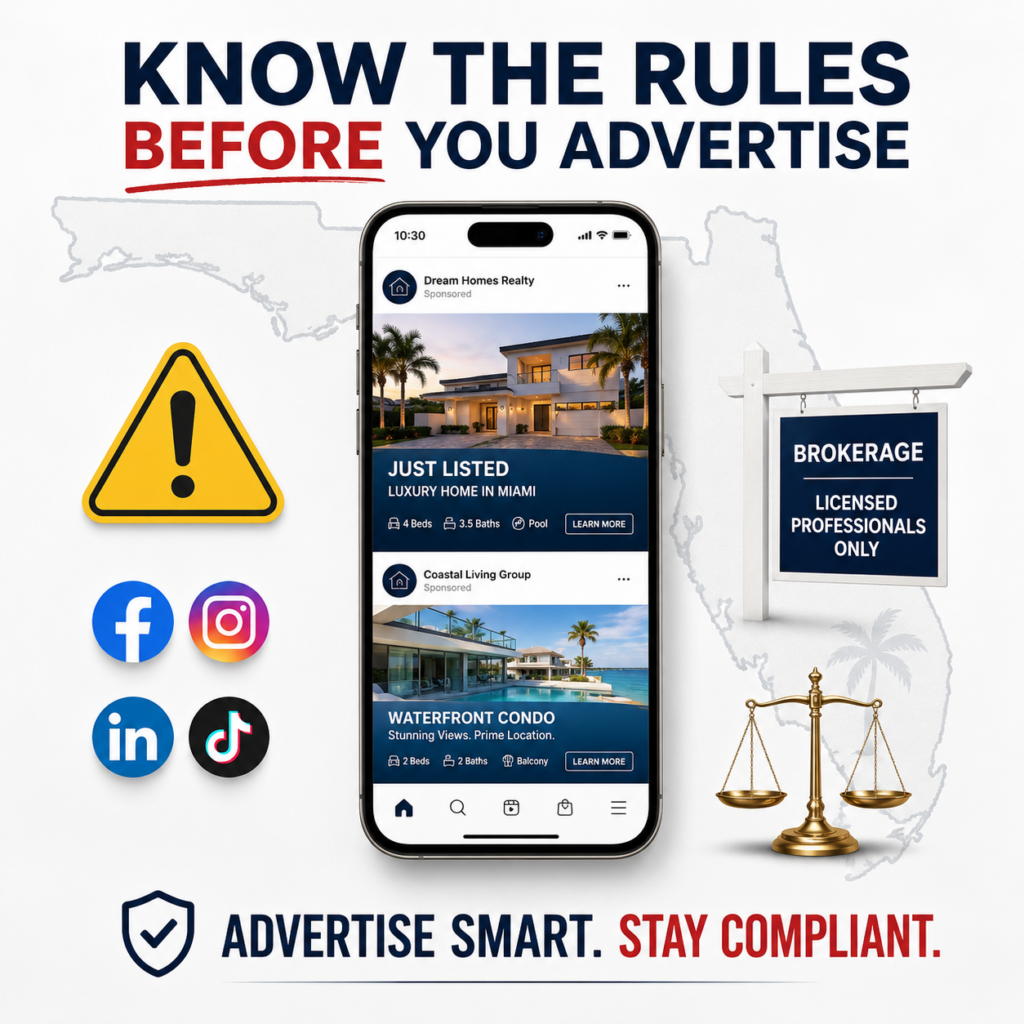
Understanding Florida real estate advertising laws so you can market legally, professionally, and confidently
TL;DR
Florida real estate advertising rules are designed to protect consumers from misleading or deceptive marketing. Real estate licensees must clearly identify their brokerage in advertisements, avoid false or misleading statements, and follow both Florida law and FREC advertising regulations. Violations can lead to fines, disciplinary action, and damage to your professional reputation.
Why Florida real estate advertising Rules Matter in Florida Real Estate
Marketing is one of the most important parts of building a successful real estate business.
However, in Florida real estate, advertising is not just about creativity—it is also about compliance.
The Florida Real Estate Commission (FREC) regulates how licensees advertise properties and services in order to protect consumers from misleading information.
As a result, even small advertising mistakes can create serious problems for licensees.
That is why every Florida real estate professional should understand what is allowed—and what is prohibited.
The Basic Rule: Florida real estate advertising Must Not Be Misleading
The most important advertising rule is simple:
Advertising cannot be false, deceptive, or misleading.
This applies to:
- Social media posts
- Websites
- Business cards
- Email marketing
- Flyers and signs
- Video marketing
- Online advertisements
If an advertisement creates confusion or gives consumers inaccurate information, it may violate Florida law.
Even wording that seems harmless can create compliance concerns if consumers could misunderstand the message.
Brokerage Identification Requirements
One of the most heavily tested and commonly violated rules involves brokerage identification.
Florida law requires that the brokerage firm’s registered name appear in advertising.
Important Requirements for Florida real estate advertising
The brokerage name must:
- Be easily noticeable
- Not be hidden or misleading
- Appear in a clear and readable manner
- Be displayed consistently across marketing platforms
This applies to:
- Social media profiles
- Instagram and Facebook ads
- Websites
- Yard signs
- Digital marketing
- Video advertisements
- Email campaigns
Many advertising violations occur simply because agents forget to include proper brokerage identification on social media or online advertisements.
New agents are especially vulnerable to these mistakes because they often focus more on marketing creativity than compliance.
Why Social Media Creates So Many Violations
Social media moves fast.
Agents often create posts quickly in order to stay active and competitive online.
However, speed creates problems.
A post that takes only 30 seconds to publish can still create a serious compliance issue if required information is missing.
Common Social Media Mistakes
Some of the most common violations include:
- Missing brokerage identification
- Using misleading team names
- Advertising listings without permission
- Making exaggerated claims
- Posting fair housing violations unintentionally
Because of this, agents should review every post before publishing it.
Team Advertising Rules
Real estate teams are common in Florida, but team advertising has special requirements.
What Teams Cannot Do
A team name cannot:
- Contain words that imply the team is a separate brokerage
- Mislead consumers into believing the team operates independently
- Hide the supervising brokerage
- Create confusion about who supervises the transaction
For example, a team generally cannot advertise in a way that suggests it is its own real estate company if it is actually operating under another broker.
Consumers must always understand which brokerage is responsible for the services being offered.
Blind Advertising Is Prohibited
Blind advertising is a major issue in Florida real estate law.
What Is Blind Advertising?
Blind advertising occurs when a licensee advertises real estate services without disclosing the brokerage name.
Example
A social media advertisement saying:
Call me to buy your dream home!
Without identifying the brokerage, this type of advertisement could create a problem.
Florida rules require consumers to know which brokerage is behind the advertisement.
Blind advertising violations are extremely common among newer agents using social media for lead generation.
Misrepresentation and False Claims in Florida real estate advertising
Licensees must avoid statements that exaggerate, misrepresent, or falsely describe a property or service.
Examples of Potential Violations
- Advertising a property feature that does not exist
- Misrepresenting square footage
- Claiming “waterfront” when the property is not truly waterfront
- Using deceptive pricing language
- Advertising unavailable incentives
- Misleading consumers about property condition
Even if the mistake was unintentional, misleading advertising can still lead to complaints.
This is why careful review of property information is critical before publishing advertisements.
Fair Housing Advertising Violations
Advertising must also comply with federal fair housing laws.
Advertisements cannot express preferences or limitations based on protected classes.
Examples of Problematic Language in Florida real estate advertising
- “Perfect for young couples”
- “Ideal for Christians”
- “Adults only”
- “Great for families without children”
Even casual wording can create fair housing concerns.
Instead, advertisements should focus on the property itself—not the type of person who should live there.
Better Alternatives
Instead of describing people, describe property features:
- Quiet neighborhood
- Large backyard
- Nearby shopping and parks
This approach keeps the focus on the property rather than protected characteristics.
Using Testimonials and Reviews
Testimonials can be powerful marketing tools, but they should be truthful and not misleading.
Best Practices for Florida real estate advertising
- Use genuine client reviews
- Avoid exaggerated claims
- Do not guarantee future results
- Keep testimonials accurate and current
For example:
I guarantee I can sell any home in 24 hours.
This type of statement could create legal and ethical problems.
Consumers may rely on these claims when making financial decisions, which is why regulators take them seriously.
Internet and Website Advertising
Websites must also comply with Florida advertising rules.
Important Areas to Review
- Brokerage identification
- Contact information
- Team branding
- Property descriptions
- Lead generation pages
- Testimonials and endorsements
- Listing information accuracy
Licensees should regularly review their websites to ensure information stays accurate and compliant.
Outdated information can become misleading even if it was accurate when originally published.
Why Florida real estate advertising Rules Are Strict
Advertising laws exist to protect the public.
Consumers rely heavily on real estate advertisements when making financial decisions.
Because of this, Florida regulators take advertising violations seriously.
Penalties may include:
- Fines
- License discipline
- Required education
- Probation
- Suspension in serious cases
Repeated violations can damage both your reputation and your long-term career opportunities.
How to Protect Yourself
Fortunately, most advertising violations are preventable.
Best Practices for Florida Agents
- Always include brokerage identification
- Review advertisements before publishing
- Avoid exaggerated language
- Be careful with team branding
- Stay current on FREC rules
- Verify listing information carefully
- Review fair housing guidelines regularly
When in doubt, ask your broker before posting or publishing an advertisement.
That single step can prevent expensive mistakes later.
Why Compliance Builds Trust
Good advertising compliance is not just about avoiding discipline.
It also helps build consumer trust.
When advertisements are:
- Clear
- Honest
- Professional
- Accurate
Consumers feel more confident working with you.
Over time, that professionalism helps agents build stronger reputations and better long-term businesses.
Continue Learning
Understanding advertising rules is an important part of becoming a successful Florida real estate professional.
You may also find these resources helpful:
- The Most Common Mistakes New Florida Real Estate Agents Make
- Florida Real Estate Sales Associate State Exam Guide
- Working Full-Time vs Part-Time in Real Estate
- Florida Real Estate Commission (FREC) Explained
Final Thoughts for Florida real estate advertising
Advertising can help build a successful real estate career—but only when it is done correctly.
Florida agents who understand advertising rules:
- Protect their license
- Build consumer trust
- Avoid costly mistakes
- Create more professional marketing
- Build stronger long-term businesses
The best advertising is not only effective—it is also compliant.
Understanding Florida advertising rules early in your career can help you avoid many of the most common mistakes that lead to complaints and disciplinary action.
Ready to Take the Next Step?
Learn more about Florida real estate licensing, exam preparation, and career training at:
Tags: Florida Real Estate Advertising, FREC Advertising Rules, Blind Advertising Florida, Real Estate Marketing Rules, Florida Real Estate Compliance, Florida Real Estate Social Media Rules, Brokerage Advertising Requirements
“`